Follow Us

 Spanish

Jan 09 2026
Jan 08 2026
Jan 06 2026
Jan 05 2026
In the world of power transmission, the debate between timing belt drives and chain drives continues to be a focal point for industry professionals, engineers, and automotive enthusiasts alike. Pioneer Transmission Limited (hereafter referred to as Pioneer Transmission ), a leader in the development and manufacturing of transmission solutions, explores this comparison in detail, considering factors such as efficiency, durability, maintenance, and application-specific performance.
Timing belt drives and chain drives are both widely used for transmitting power in mechanical systems, especially in the automotive and industrial sectors. Timing belts, often made from high-strength materials like rubber and reinforced with fibers, ensure synchronous movement between shafts. Chain drives, on the other hand, rely on interlocking metal links to transfer motion and force.
Both systems have unique advantages and limitations, and the choice between the two often depends on the specific requirements of the application, such as load, speed, environmental conditions, and maintenance preferences.
Quiet Operation: Timing belt drives, especially those made from high-quality rubber belt materials, are known for their significantly quieter performance compared to chain drives. This makes them ideal for applications where noise reduction is a priority, such as in passenger vehicles and office machinery.
Low Maintenance: Unlike chains, timing belts do not require regular lubrication. This reduces the overall maintenance burden and eliminates the risk of oil contamination in sensitive environments.
Precision and Accuracy: Timing belts provide excellent positional accuracy, making them suitable for applications like camshaft drives in automotive engines and precision machinery in manufacturing.
Corrosion Resistance: Rubber belt materials used in timing belts are less susceptible to rust, extending the life of the belt in humid or corrosive environments.
Pioneer Transmission Technology has invested significantly in the research and development of advanced timing belt materials, including innovative rubber compounds that enhance performance and longevity. Their expertise in automotive V-belts further demonstrates their commitment to delivering reliable and efficient power transmission solutions.
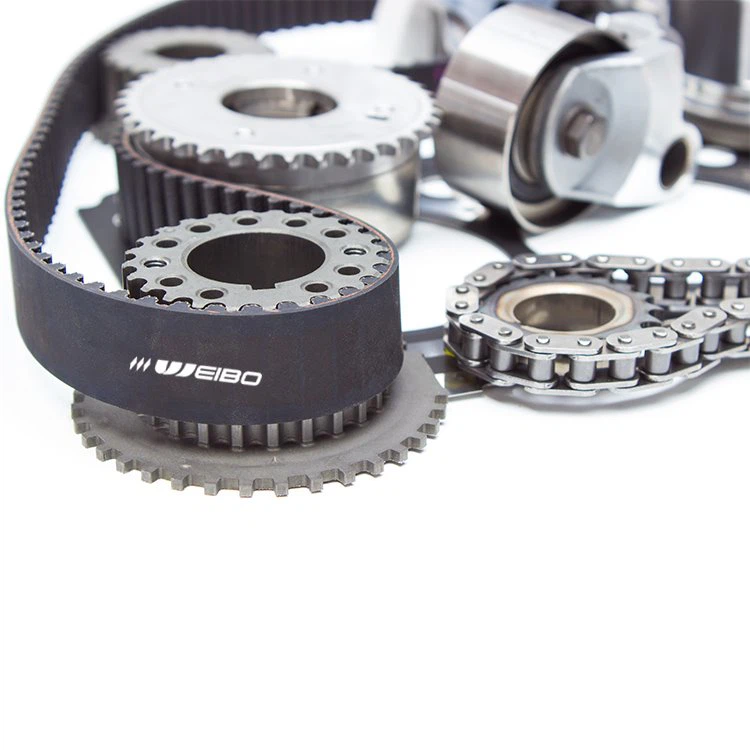
High Load Capacity: Chain drives are renowned for their ability to transmit higher loads and withstand greater stress, making them suitable for heavy-duty applications such as industrial machinery and motorcycles.
Durability: Metal chains generally offer longer service life under harsh operating conditions, provided they are well-maintained and properly lubricated.
Temperature Tolerance: Chain drives can operate effectively across a wide range of temperatures, including extreme heat where some rubber belt materials might degrade.
The automotive industry offers a clear example of the ongoing evolution in transmission technology. In recent years, there has been a noticeable shift towards timing belt drives, particularly in passenger vehicles. This trend is largely driven by the demand for quieter, lighter, and more fuel-efficient engines. Timing belts contribute to these goals by reducing engine noise and weight, while also enabling more compact engine designs.
However, chain drives remain the preferred choice in high-performance and heavy-duty vehicles, where maximum strength and durability are required. Pioneer Transmission Technology has responded to these market trends by expanding its product portfolio to include both advanced timing belts and robust chain drive solutions, ensuring that customers can select the optimal transmission technology for their specific needs.
| Feature | Timing Belt Drive | Chain Drive |
|---|---|---|
| Material | Rubber belt (reinforced) | Metal links |
| Noise Level | Low | Moderate to High |
| Maintenance | Minimal | Requires Lubrication |
| Load Capacity | Moderate | High |
| Precision | High | Moderate |
| Corrosion Resistance | Excellent | Good (if maintained) |
| Cost | Generally Lower | Generally Higher |
Beyond timing belts and chain drives, the transmission industry also relies heavily on automotive V-belts for auxiliary systems such as alternators, water pumps, and air conditioning compressors. Pioneer Transmission Technology has pioneered the development of high-performance rubber belt solutions for these applications, focusing on durability, flexibility, and resistance to wear.
Recent advances in rubber compounding and belt design have resulted in automotive V-belts that offer longer service intervals and improved energy efficiency. These innovations not only reduce the total cost of ownership for vehicle operators but also contribute to sustainability goals by minimizing waste and resource consumption.
For OEMs, engineers, and maintenance professionals, the choice between a timing belt drive and a chain drive must be guided by a thorough understanding of the application’s requirements. Factors such as operating environment, load, speed, and desired maintenance intervals should be carefully considered.
For applications prioritizing quiet operation, lightweight design, and minimal maintenance, timing belt drives—especially those utilizing advanced rubber belt technology—are often the preferred solution.
Where maximum strength, long-term durability, and resistance to extreme conditions are paramount, chain drives continue to be the standard.
Pioneer Transmission Technology’s broad portfolio and technical expertise enable customers to make informed decisions, backed by reliable products and industry-leading support.
The answer to whether a timing belt drive is better than a chain drive ultimately depends on the specific application and performance criteria. Timing belt drives offer clear advantages in terms of noise reduction, maintenance, and precision, particularly when manufactured with high-quality rubber belt materials. Chain drives, meanwhile, excel in heavy-duty applications where load capacity and durability are critical.
Pioneer Transmission Technology remains at the forefront of this evolving industry, delivering innovative transmission solutions—including timing belts, chain drives, and automotive V-belts—that meet the diverse needs of global customers. By staying ahead of industry trends and continuously improving product performance, Pioneer Transmission Technology is helping to shape the future of power transmission.
For more information on the latest advancements in timing belt and chain drive technology, or to explore Pioneer Transmission Technology’s full range of products, visit our official website or contact our technical team today.


